
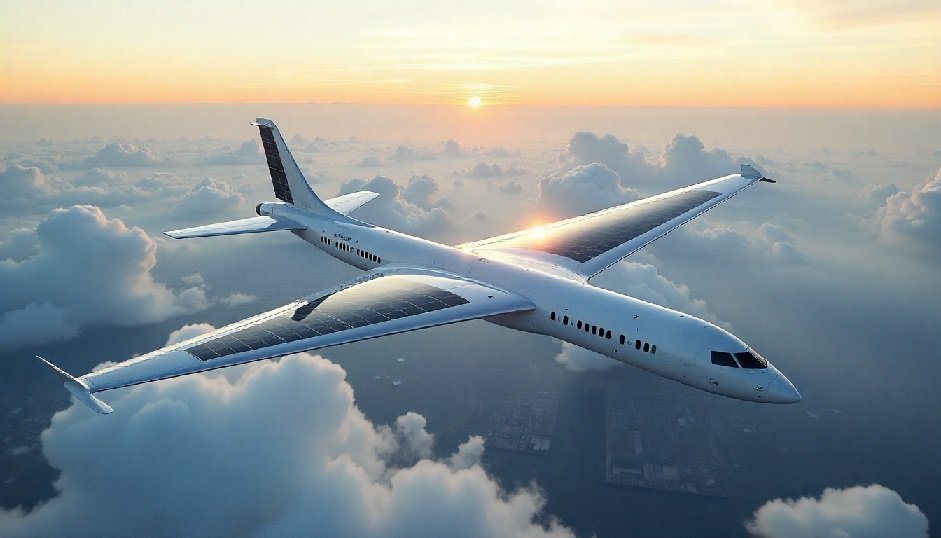
What if the aircraft you fly in today looks completely different from the one you’ll board in ten years? The aviation industry has always pushed the boundaries of what is possible, transforming how we travel, conduct business, and explore the world. From the Wright brothers’ first powered flight to modern commercial jets, innovation has been the driving force behind safer, faster, and more efficient air travel. Understanding these remarkable advancements gives us insight into where aviation is headed and why the skies continue to evolve at such a rapid pace.
1. Advanced Materials and Composite Construction
Modern aircraft rely heavily on composite materials that are significantly lighter and stronger than traditional aluminum. Carbon fiber reinforced polymers, aramid fibers, and other advanced composites have revolutionized aircraft design by reducing weight while maintaining structural integrity. For example, the Boeing 787 Dreamliner incorporates approximately 50 percent composite materials in its primary structure, leading to reduced fuel consumption and lower operating costs. These materials also resist corrosion better than metal, extending aircraft lifespan and reducing maintenance requirements. Engineers continue to develop new composite formulations that can withstand extreme temperatures and pressures encountered during flight.
2. Aerodynamic Design and Winglet Technology
The shape of an aircraft’s wings and fuselage dramatically impacts fuel efficiency and performance. Winglets, those distinctive upright extensions at the wing tips, reduce drag and improve fuel economy by redirecting airflow in ways that decrease turbulence. Modern split-scimitar winglets and other advanced wing-tip devices have become standard on both commercial and cargo aircraft, sometimes saving airlines thousands of dollars in fuel costs annually. Computational fluid dynamics software allows engineers to test thousands of design variations before building physical prototypes. These aerodynamic improvements represent some of the most cost-effective innovations available to the aviation industry.
3. Engine Efficiency and Turbofan Technology
Jet engines have undergone tremendous transformation since commercial aviation began. Modern turbofan engines feature larger bypass ratios, meaning more air flows around the engine core rather than through it, resulting in greater efficiency and quieter operation. The latest generation of engines achieves unprecedented fuel efficiency while simultaneously reducing noise pollution and emissions around airports. Modern high-bypass turbofan engines can propel aircraft at cruise speeds exceeding 500 miles per hour while consuming dramatically less fuel than engines from just two decades ago. Innovations in turbine blade materials, particularly heat-resistant superalloys and ceramic coatings, allow engines to operate at higher temperatures and generate more power.
4. Avionics and Glass Cockpit Systems
The transformation of aircraft cockpits from analog instrument panels to integrated digital systems has fundamentally changed how pilots operate aircraft. Glass cockpit technology consolidates dozens of individual instruments into a few large display screens that provide comprehensive flight information in real time. These systems integrate navigation, weather radar, terrain awareness, and traffic collision avoidance data into unified displays that reduce pilot workload and improve decision-making. Modern avionics can provide guidance during difficult weather conditions or emergency situations, significantly enhancing safety margins. The continuous software updates available to glass cockpits mean that safety features and capabilities improve throughout an aircraft’s operational lifetime.
5. In-Flight Connectivity and Passenger Experience Systems
The ability to stay connected while flying at 35,000 feet has transformed the passenger experience from one of isolation to productive continuity. Satellite-based and air-to-ground wifi systems now allow passengers to work, stream, and communicate nearly as seamlessly as they would on the ground. Airlines have invested in entertainment systems that offer thousands of movies, television shows, and games accessible through personal seatback screens or wireless devices. Modern aircraft interiors also feature improved cabin pressure and humidity control systems that reduce jet lag and dehydration, making long flights more comfortable. These passenger-focused technologies have become powerful differentiators in a competitive airline market.
6. Cabin Maintenance and Sanitation Technology
Behind the scenes, aircraft cabin maintenance has advanced considerably to meet increasingly rigorous health and safety standards. Ground crews rely on purpose-formulated products to keep onboard systems clean and fully operational between flights, including the use of lavatory blue fluid, which is a deodorizing and sanitizing agent used in aircraft waste management systems to maintain hygienic conditions throughout a flight. Automated cleaning protocols and antimicrobial surface treatments have also been introduced across cabin interiors to limit the spread of pathogens in enclosed environments. Advanced air filtration systems, including high-efficiency particulate air filters, cycle cabin air frequently and remove airborne contaminants. These sanitation and maintenance innovations contribute directly to passenger wellbeing and regulatory compliance across global airline fleets.
7. Safety Systems and Collision Avoidance
Aircraft safety depends on multiple redundant systems working together to prevent accidents and mitigate damage when problems occur. Traffic collision avoidance systems warn pilots of nearby aircraft and recommend evasive maneuvers when necessary. Terrain awareness and warning systems use terrain databases and radar altimetry to alert pilots if an aircraft is descending toward mountains or other obstacles. Weather radar systems allow pilots to identify severe turbulence and lightning-prone areas to navigate around dangerous conditions. Modern aircraft also feature fire detection and suppression systems throughout the fuselage, cargo holds, and engine compartments that respond automatically to emergencies.
8. Sustainable Aviation Fuels and Emissions Reduction
The aviation industry increasingly focuses on reducing its environmental impact through alternative fuels and design innovations. Sustainable aviation fuels derived from plants, algae, or recycled materials can reduce lifecycle carbon emissions by up to 80 percent compared to conventional jet fuel. Aircraft manufacturers are also exploring hybrid electric propulsion systems and all-electric designs for regional flights, which could reshape short-distance air travel. Innovations in battery technology and lightweight materials will be crucial to realizing electric aircraft in the coming decades. These developments represent a commitment to making aviation compatible with global climate goals while maintaining the industry’s growth trajectory.
9. Autonomous and Remotely Piloted Aircraft Systems
Autonomous flight technology has moved well beyond experimental drones and into practical applications across commercial and military aviation. Fly-by-wire control systems, which replace mechanical linkages with electronic signals, were among the earliest forms of automation and now form the backbone of modern commercial flight control. Increasingly sophisticated autopilot systems can manage entire flight phases from takeoff to landing, reducing crew workload and improving consistency in adverse conditions. The development of remotely piloted aircraft systems has opened new frontiers in cargo delivery, aerial surveillance, and search-and-rescue operations. Regulatory frameworks around the world are evolving to accommodate higher levels of autonomy as the technology continues to mature.
10. Additive Manufacturing and 3D-Printed Components
Additive manufacturing, commonly known as 3D printing, has introduced a new paradigm for producing aircraft components with complex geometries that are difficult or impossible to fabricate through conventional methods. Aerospace manufacturers use metal and polymer 3D printing to produce brackets, ducting, interior fittings, and even structural components with reduced material waste and faster production timelines. GE Aviation and Safran, for example, have incorporated 3D-printed fuel nozzles into commercial jet engines, achieving greater durability and precision than traditionally manufactured parts. These techniques also accelerate the prototyping process, allowing engineers to test new designs more rapidly and at lower cost. As material science and printing resolution continue to improve, additive manufacturing is expected to play an expanding role in both aircraft production and in-service maintenance.
Conclusion
The innovations driving modern aircraft represent decades of research, engineering excellence, and a commitment to improving aviation safety and efficiency. From revolutionary materials and aerodynamic designs to sophisticated avionics and environmental solutions, these advancements have transformed aviation into an industry that is safer, more efficient, and more sustainable than ever before. As technology continues to evolve, future generations of aircraft will likely incorporate even more remarkable developments in electric propulsion, autonomous systems, and materials science. The next decade will push aviation forward into frontiers that seem extraordinary by today’s standards. Understanding these innovations helps us appreciate the complexity and ingenuity required to keep billions of people safely connected across the globe each year.

