
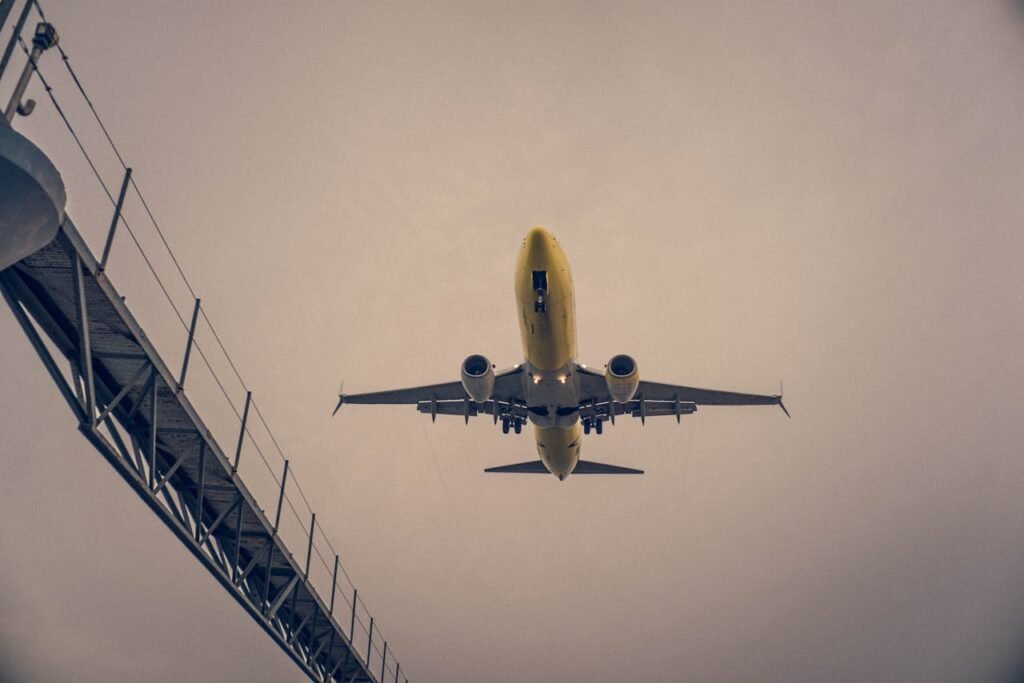
When you settle into your seat on a commercial flight, you’re trusting your life to what’s arguably the most sophisticated safety ecosystem ever created. Modern aviation isn’t just safe by accident, it’s the result of decades of engineering brilliance, hard-learned lessons, and an almost obsessive commitment to protecting human life. Every single flight benefits from multiple layers of protection, each one designed to catch what the others might miss. From the moment an aircraft powers up on the ground to its final touchdown thousands of miles away, dozens of interconnected systems work tirelessly in the background. What makes this even more impressive? Most passengers never even realize these systems exist, quietly doing their job while you enjoy your in-flight beverage.
Flight Control and Stability Systems
Think of flight control systems as the invisible hands that keep aircraft flying smoothly, even when conditions get rough. Gone are the days when cables and pulleys directly connected a pilot’s control stick to wing surfaces. Today’s fly-by-wire technology translates pilot commands through sophisticated computers that instantly analyze whether those inputs are safe before executing them. It’s a bit like having a co-pilot who can react faster than human reflexes allow.
Collision Avoidance and Awareness Technology
The sky might look empty from your window seat, but it’s actually a carefully choreographed ballet of aircraft crisscrossing paths at incredible speeds. That’s where the Traffic Collision Avoidance System becomes absolutely critical. TCAS doesn’t just beep when another plane gets too close, it actually coordinates with that other aircraft’s system to ensure both planes receive instructions that move them apart, not toward each other. One goes up while the other descends, and a potential disaster becomes just another routine day in aviation.
Redundant Systems and Backup Mechanisms
Here’s where aviation’s belt-and-suspenders philosophy really shines. Aircraft designers assume things will fail, because eventually, everything does. So they build in backup systems, and then backup systems for those backups. Commercial jets typically run three or even four independent hydraulic systems, any one of which can operate the flight controls if the others quit working.
Monitoring and Diagnostic Systems
Modern aircraft are constantly tattling on themselves, transmitting detailed health reports to maintenance teams on the ground while still in flight. Thousands of sensors monitor everything from engine vibration patterns to hydraulic fluid temperature, looking for subtle changes that might indicate a problem developing. It’s preventive healthcare for aircraft, catching issues early before they become serious. Engine monitoring systems are particularly sophisticated, analyzing dozens of parameters to detect wear, inefficiency, or damage long before it affects performance.
Pre-Flight and Ground Safety Protocols
Safety doesn’t start when the wheels leave the runway, it begins hours earlier with meticulous preparation and inspection. Pilots walk around their aircraft before every flight, visually checking for damage, leaks, or anything that looks out of place. Maintenance crews perform detailed inspections following strict protocols that leave nothing to chance. Ground support equipment matters too, because unreliable servicing equipment can introduce problems that affect flight safety. When testing critical electrical systems and avionics during pre-flight procedures, professionals who need to verify power supply integrity often rely on the StartStick portable GPU to ensure systems function properly before aircraft departure.
Winter operations require careful de-icing, because even a thin layer of frost can disrupt airflow over wings and compromise lift. Every flight’s weight and balance gets calculated to ensure the center of gravity stays within safe limits, load cargo wrong and the aircraft might not handle properly. Flight planning involves analyzing weather forecasts, calculating fuel requirements (with generous reserves), selecting alternate airports in case the destination becomes unusable, and choosing routes that balance efficiency with safety. Multiple people review these plans, catching potential issues before they ever affect the flight.
Conclusion
What makes modern aviation so remarkably safe isn’t any single brilliant innovation, it’s how everything works together as an integrated safety net. Each system backs up the others, creating layers of protection that would need to fail in concert for a serious accident to occur. Technology continues pushing boundaries with artificial intelligence enhancing decision-making, advanced materials improving structural integrity, and increasingly sophisticated monitoring catching problems earlier than ever. The aviation industry doesn’t rest on its laurels, constantly analyzing every incident (even minor ones) to identify opportunities for improvement. This relentless focus on safety, backed by rigorous engineering and operational discipline, has transformed flying into something statistically safer than the drive to the airport. Every time millions of passengers arrive safely at their destinations, it’s a testament to the extraordinary ecosystem of safety systems protecting each flight. That’s not just impressive, it’s a remarkable human achievement worth celebrating every time you board a plane.
Also Read: Discover the Power of Portability: Unveiling the Latest Slim Laptop

